
Embroidered Shirts for Men: A Complete Style & Buying Guide
There was a time when embroidery on menswear meant one thing — a heavily worked kurta pulled out only for weddings. That's changed. Walk into any modern Indian wardrobe today and you'll likely find at least one embroidered shirt hanging next to the plain formals, worn on evenings when a plain shirt feels like too little and a full ethnic outfit feels like too much.
Embroidered shirts for men now sit in that useful middle ground — detailed enough to stand out, but still built like a regular shirt you can wear to a dinner, a function, or a casual get-together. This guide walks through what actually goes into a good one, how to pick between styles, and where each kind of embroidery fits into your week.
What Makes an Embroidered Shirt Different
A standard shirt is defined by its cut and fabric. An embroidered shirt is defined by all of that, plus a layer of thread work that changes how the piece reads from a distance and up close. The embroidery can sit as a small motif on the chest or yoke, run across the whole placket, or spread out as an all-over pattern.
The thing to understand is that embroidery isn't just decoration — it changes the weight, drape, and even the wash care of the shirt. A shirt with dense thread work behaves differently from a plain one, so it helps to know what you're buying before you commit to it.
Fabric Matters as Much as the Design
Cotton is the most common base for embroidered shirting because it holds the stitching cleanly and doesn't pucker easily. Linen-cotton blends are also used for embroidered pieces meant for warmer months, since they keep the shirt breathable even with extra thread work added on. A well-made shirt uses a base fabric dense enough to support the embroidery without the stitches pulling or the fabric sagging around them.
Thread Work and Motif Styles
Embroidery on menswear generally falls into a few recognisable categories:
- Minimal motif work — a small emblem or crest on the chest, subtle enough for semi-formal wear
- Placket or yoke embroidery — detailing concentrated along the button line or shoulder seam
- Animal and nature motifs — birds, big cats, botanical patterns worked in as a central design
- All-over embroidery — the most statement-heavy option, where thread work covers a large part of the shirt
Each style suits a different comfort level with standing out, which is worth thinking about before you buy.
Occasions: Where Embroidered Shirts Actually Work
Festive and family functions. This is where embroidered shirts do the most work. A mehendi, a sangeet, or a Diwali gathering calls for something more than a plain shirt but doesn't always need a full ethnic outfit. A shirt with well-placed embroidery hits that note without overdressing.
Dinners and evening plans. A shirt with a subtle motif or contained placket detail works well for a nice dinner out, paired with dark trousers.
Smart-casual weekends. Lighter embroidery — a small crest or minimal detailing — can be worn open-collared with jeans for a casual look that still has some personality.
Gifting. Embroidered shirts are also a popular gifting choice, since the design detail makes them feel considered rather than generic.
Five Embroidered Shirts Worth Knowing
To make this less abstract, here's a look at a few pieces from the embroidered shirts for men collection that illustrate the range described above.
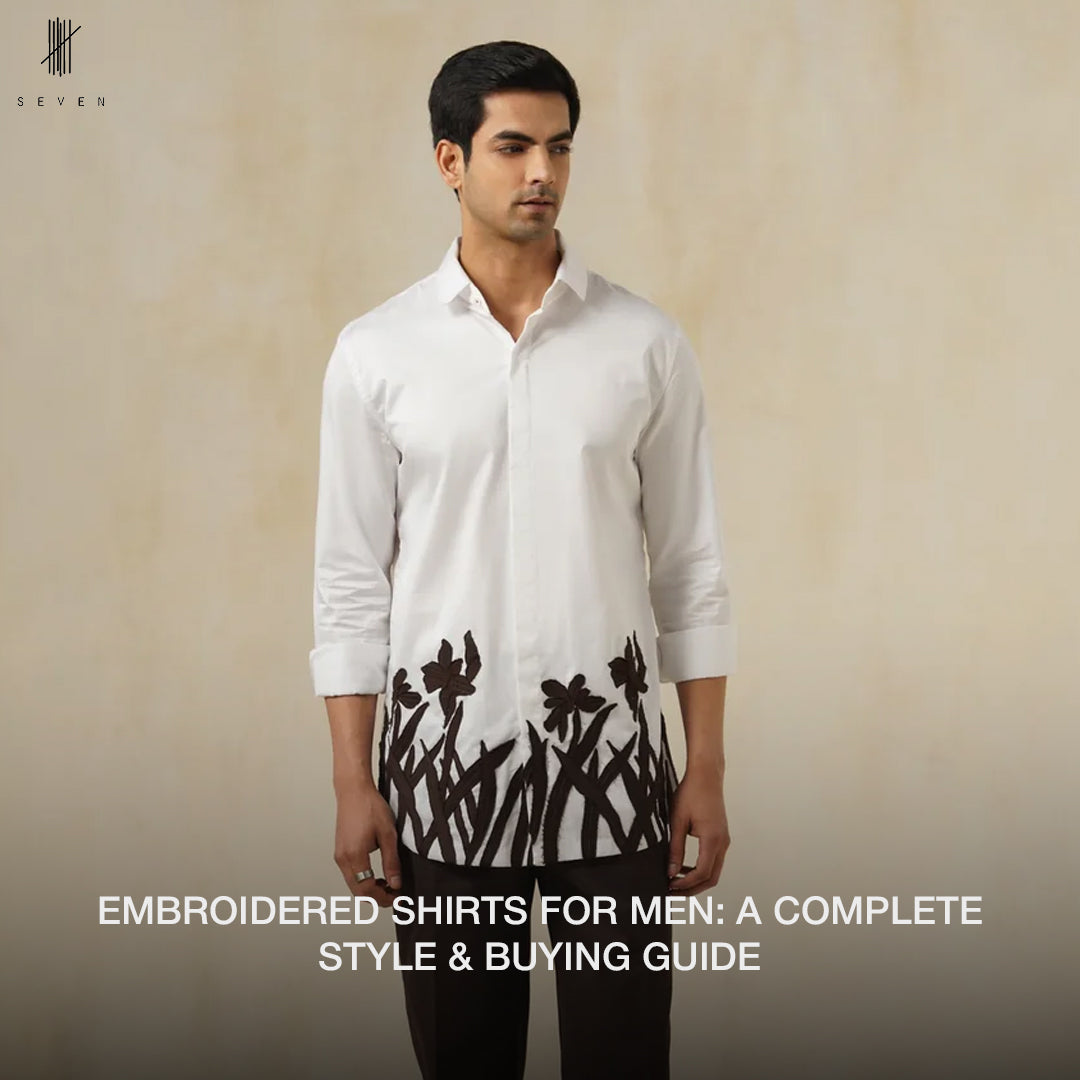
Desert Bloom | Men's Linen Emb Shirt uses a linen base, which keeps the shirt light even with embroidery worked into it. The botanical motif gives it a festive character without tipping into full ethnic territory, making it a reasonable pick for daytime functions where the weather is a real factor.
Bloom Grey | Men's Linen Emb Shirt takes the same linen base but in a muted grey tone, which makes the embroidery read as more restrained. This is a useful option for anyone who wants the texture of embroidery without a loud colour statement — it works equally for an evening event or a smart-casual dinner.
Noir Meadow | Men's Emb Cotton Shirt is built on a cotton base with a darker palette, which changes how the embroidery catches the light compared to the linen pieces above. Cotton also tends to hold denser thread work more cleanly, so this style suits patterns with more detail packed into a smaller area.
Python Embroidered Shirt is an example of the animal-motif category — a single, well-placed design rather than an all-over pattern. This kind of shirt tends to work best as a standalone statement piece, paired with plain trousers so the embroidery stays the focal point.
Lion Embroidered Shirt follows a similar approach with a different motif, and shows how the same design logic — one clear central image rather than scattered detailing — can be applied across different themes. It's a good reference point if you're deciding between a subtle crest and a more expressive central motif.
Looking at these five together, the pattern is clear: fabric choice changes comfort and drape, while motif placement changes how loud or restrained the shirt feels. Matching both to the occasion is really the whole exercise.
How to Choose the Right One
Start with the occasion, not the design. Decide where you'll actually wear the shirt before falling for a bold pattern. A shirt with all-over embroidery photographs well but can feel like too much for a regular dinner.
Check the fabric before the pattern. A linen-cotton blend will feel cooler through the day, while a heavier cotton base tends to hold detailed embroidery more crisply. Neither is wrong — it depends on your climate and how often you'll wear it.
Think about pairing. A shirt with heavy embroidery generally wants simple trousers around it. Save the layered, detailed pairing for shirts with more restrained motif work.
Look at construction, not just the thread work. The embroidery is the eye-catching part, but stitching quality, collar finish, and how well the fabric holds its shape after a wash matter just as much for how long the shirt stays wearable.
Caring for an Embroidered Shirt
Embroidered pieces need a little more attention than plain shirts. Turn the shirt inside out before washing to protect the stitched side from friction. Use cold or lukewarm water and a gentle cycle, and avoid wringing the fabric, which can pull at the thread work over time. Air dry rather than tumble dry, and iron from the inside if the embroidery is dense, so the iron doesn't flatten the raised stitching. Store on a hanger rather than folded, especially for shirts with heavier motifs, to keep the design from creasing.
Final Thoughts
An embroidered shirt earns its place in a wardrobe by doing something a plain shirt can't — adding personality and occasion-appropriate detail without requiring a full outfit change. The trick is matching the fabric and the motif style to where you'll actually wear it, rather than buying the boldest design in the store. Once you get that match right, an embroidered shirt becomes one of those pieces you reach for repeatedly rather than saving for one big event.
Frequently Asked Questions
1. Are embroidered shirts for men suitable for office wear?
Shirts with minimal embroidery — a small chest motif or subtle placket detail — can work in relaxed office settings. Heavily embroidered or all-over patterns are better suited to evening or festive settings rather than daily office wear.
2. What fabric is best for an embroidered shirt in hot weather?
A linen-cotton blend is generally the more comfortable choice in warmer months, since it stays breathable even with added thread work, compared to a pure heavier cotton base.
3. Can embroidered shirts be worn casually, or are they only for occasions?
Both. Shirts with smaller, contained motifs work well for casual weekend wear, while denser or all-over embroidery tends to suit festive functions and evening plans better.
4. How should I wash an embroidered shirt without damaging the thread work?
Wash inside out in cold or lukewarm water on a gentle cycle, avoid wringing, and air dry. Iron from the reverse side if the embroidery is raised or dense.
5. What should I pair with a heavily embroidered shirt?
Keep the rest of the outfit simple — plain trousers and minimal accessories — so the embroidery remains the focal point instead of competing with other patterns.