
Article: Printed Shirts for Men: A Complete Style & Buying Guide (2026)
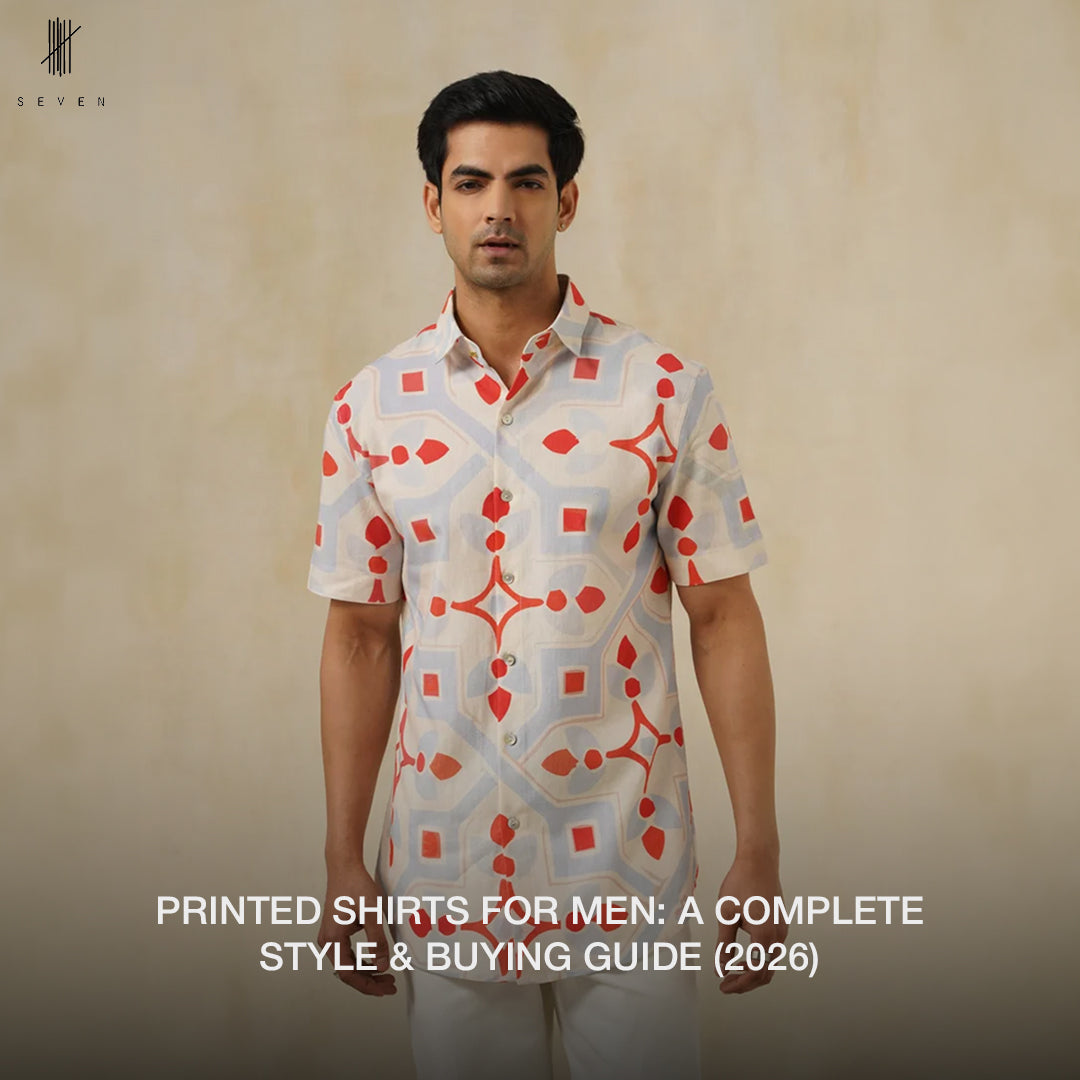
Printed Shirts for Men: A Complete Style & Buying Guide (2026)
Solid shirts are safe. Printed shirts are where most men actually start experimenting with their wardrobe. A good print does something a plain shirt can't — it gives an outfit a starting point, a mood, a reason to skip the blazer and just let the shirt carry the look.
Printed shirts for men have moved well past the loud, all-over holiday prints they used to be associated with. Today the category spans everything from tight geometric patterns to soft botanical motifs to abstract art-inspired designs, which means there's a print for nearly every kind of dresser, not just the ones chasing attention. This guide breaks down how prints are built, where they work best, and how to actually choose one without ending up with something you wear twice and forget.
What Actually Defines a Printed Shirt
The print is the design applied to the fabric surface — as opposed to embroidery, which is stitched into it, or a woven pattern, which is built into the weave itself. This distinction matters because it changes how the shirt looks, feels, and ages.
A well-printed shirt should have colour that's been set into the fabric properly, not sitting on top of it like a decal. Run your hand across a good print and you shouldn't feel much of a texture change from the rest of the shirt — the print should feel like part of the fabric, not applied to it afterward.
Fabric Base Changes How the Print Reads
Most printed shirts are made on cotton or cotton-linen blends, since both fabrics take colour well and hold the pattern crisply through repeated washes. A cotton-linen base tends to give the print a slightly softer, more textured look because of the linen's natural slub, while a pure cotton base makes colours appear sharper and cleaner. Neither is better outright — it depends on whether you want the print to look graphic and bold or slightly more relaxed and textural.
Print Styles Worth Knowing
Printed shirting today generally falls into a few broad families:
- Botanical and nature prints — palm leaves, florals, abstract foliage, popular for vacation and daytime wear
- Geometric and linear prints — repeating shapes, stripes worked into patterns, or architectural motifs
- Abstract art prints — brushstroke-style or painterly patterns that read as more artistic than literal
- Colour-block and mosaic prints — patterns built from blocks or fragments of colour rather than a single repeated motif
Knowing which family a shirt belongs to helps you predict how it'll photograph, how it'll pair with the rest of your outfit, and how long it'll stay in rotation before it feels dated.
Where Printed Shirts Actually Work
Vacations and daytime outings. This is the most natural home for a printed shirt — lighter botanical or abstract prints worn open-collared with shorts or linen trousers for beach trips and weekend getaways.
Casual weekends. A geometric or colour-block print with jeans gives an outfit personality without requiring much else — no blazer, no layering, just the shirt doing the work.
Evening plans with friends. A darker-toned abstract print, tucked in with chinos, reads as put-together for a dinner or a casual night out.
Standing out at low-key events. A mosaic or artistic print can work as a lighter alternative to embroidery for functions where you want to look dressed up without going fully festive.
Five Printed Shirts Worth Knowing
To ground this in something concrete, here's a look at a few pieces from the printed shirts for men collection that show the range described above.
Linen Roar | Men's Printed Cotton-Linen Shirt sits on a cotton-linen base, which gives the print a slightly softer edge compared to a pure cotton shirt. It's a reasonable example of how the botanical print family looks when it's toned down rather than pushed toward maximalist territory.
Terra Grey | Men's Printed Cotton-Linen Shirt uses a muted grey palette with an earthy, abstract pattern, which makes it easier to wear for daytime casual settings without reading as too bold. This is a good option for anyone easing into printed shirting for the first time.
Crimson-Mosaic | Men's Printed Cotton-Linen Shirt is a clear example of the colour-block and mosaic family — fragmented patches of colour rather than a single repeated motif. It works best as a standalone piece, kept simple with plain trousers so the print stays the focal point.
Blue Canvas | Men's Printed Cotton-Linen Shirt leans into the abstract art print category, with a brushstroke-style pattern across a blue base. It shows how an artistic print can feel considered rather than random when the colour palette stays restrained to two or three tones.
Indigo Strokes Shirt is another abstract-leaning piece, built on a slightly heavier fabric than the cotton-linen options above. The denser base holds the print with more contrast, which is worth knowing if you prefer your prints to look sharp rather than softly blended.
Together these five show the spread within the category — same broad idea of a printed shirt, but very different outcomes depending on fabric base, colour restraint, and which print family the design belongs to.
How to Choose the Right One
Start with the colour palette, not the motif. A print with two or three restrained colours tends to be far more versatile than one with five or six competing tones, regardless of what the actual pattern is.
Match the print density to the setting. Dense, all-over prints suit vacation and casual settings. Smaller-scale or more spaced-out prints work better if you want the shirt to double up for slightly dressier occasions.
Check the fabric base for your climate. A cotton-linen blend breathes better in humid or hot conditions, while a pure cotton base tends to hold sharper print contrast and works well through the cooler months too.
Think about what you'll pair it with. Printed shirts generally want simple bottoms — solid trousers, denim, or chinos. Save patterned trousers or jackets for the plain shirts in your wardrobe.
Styling Guide by Occasion
Everyday casual wear: Wear a lighter, smaller-scale print untucked with jeans or shorts. Roll the sleeves and keep everything else minimal.
Vacation and travel: Botanical and abstract prints in breathable cotton-linen fabric are the obvious pick — they photograph well and handle heat comfortably.
Smart-casual evenings: Choose a print with a more restrained colour palette, tuck it into dark trousers, and skip prints with very busy, competing patterns.
Layering in cooler months: A printed shirt under a plain jacket or unstructured blazer can peek through at the collar and cuffs, adding interest without overwhelming a layered outfit.
Care & Maintenance Tips
Washing: Wash in cold or lukewarm water on a gentle cycle to protect the print from fading. Turn the shirt inside out before washing, since friction against other garments is what wears down printed colour fastest.
Drying: Air dry out of direct sunlight. Prolonged sun exposure while drying is one of the most common reasons prints fade unevenly.
Ironing: Iron from the inside of the shirt when possible, especially for prints with heavier ink coverage, to avoid the iron plate dulling the surface.
Storage: Hang printed shirts rather than folding them for long periods, which helps prevent creasing across the printed areas.
Common mistakes to avoid: washing in hot water, drying in direct sun, ironing directly over dense prints at high heat, and using bleach or harsh detergents that strip printed colour faster than plain fabric.
Final Thoughts
A printed shirt is one of the easiest ways to change how an outfit feels without changing much else about how you dress. The key is choosing a print family and colour palette that actually fits your life — vacations, weekends, evenings out — rather than picking the loudest option on the rack. Once you find a print that works for your rotation, it tends to become one of the pieces you reach for first, not last.
Frequently Asked Questions
1. Are printed shirts for men suitable for office wear?
Smaller-scale, muted prints in restrained colours can work for relaxed office settings. Bold, all-over prints are better suited to casual or vacation wear rather than daily office use.
2. What fabric works best for printed shirts in hot weather?
A cotton-linen blend is generally more breathable and comfortable in warm, humid conditions compared to a heavier pure cotton base.
3. Do printed shirts fade quickly after washing?
A well-made printed shirt shouldn't fade quickly if washed in cold water, turned inside out, and air-dried away from direct sunlight. Frequent hot washes and sun-drying are the main causes of premature fading.
4. Can printed shirts be worn for evening or festive occasions?
Yes, if the print has a restrained colour palette and a smaller, less busy pattern. Very loud or dense prints tend to suit daytime and casual settings better.
5. What should I pair with a printed shirt?
Keep the bottoms simple — solid trousers, denim, or chinos — so the print remains the focal point instead of competing with another pattern.